
Home safety is only half the picture. The habits that protect your body matter just as much.
When people think about preventing falls, they usually picture home fixes: grab bars, better lighting, non-slip mats. Those changes matter, and we cover them in detail in our Aging in Place Home Safety Checklist. But a safe home is only one half of fall prevention. The other half is the body itself: how steady someone feels on their feet, what’s in their medicine cabinet, and how well they can see and hear what’s around them.
This guide focuses on that second half: the personal habits and health checks that work alongside a safe home to lower fall risk.
In This Guide
Proper Footwear
It’s easy to overlook, but what’s on someone’s feet at home matters as much as what’s on the floor. Loose slippers, worn-out sneakers, and walking in just socks are all common, and all increase fall risk.
Look for:
- A firm, non-slip sole
- A snug fit that doesn’t require shuffling to keep the shoe on
- Low, wide heels rather than anything unstable
- Shoes that are easy to put on and take off, so there’s less temptation to go without
If a parent tends to kick off their shoes at home, a supportive pair of slippers with a real sole (not the soft, slide-on kind) can be a comfortable middle ground.
Exercise for Balance
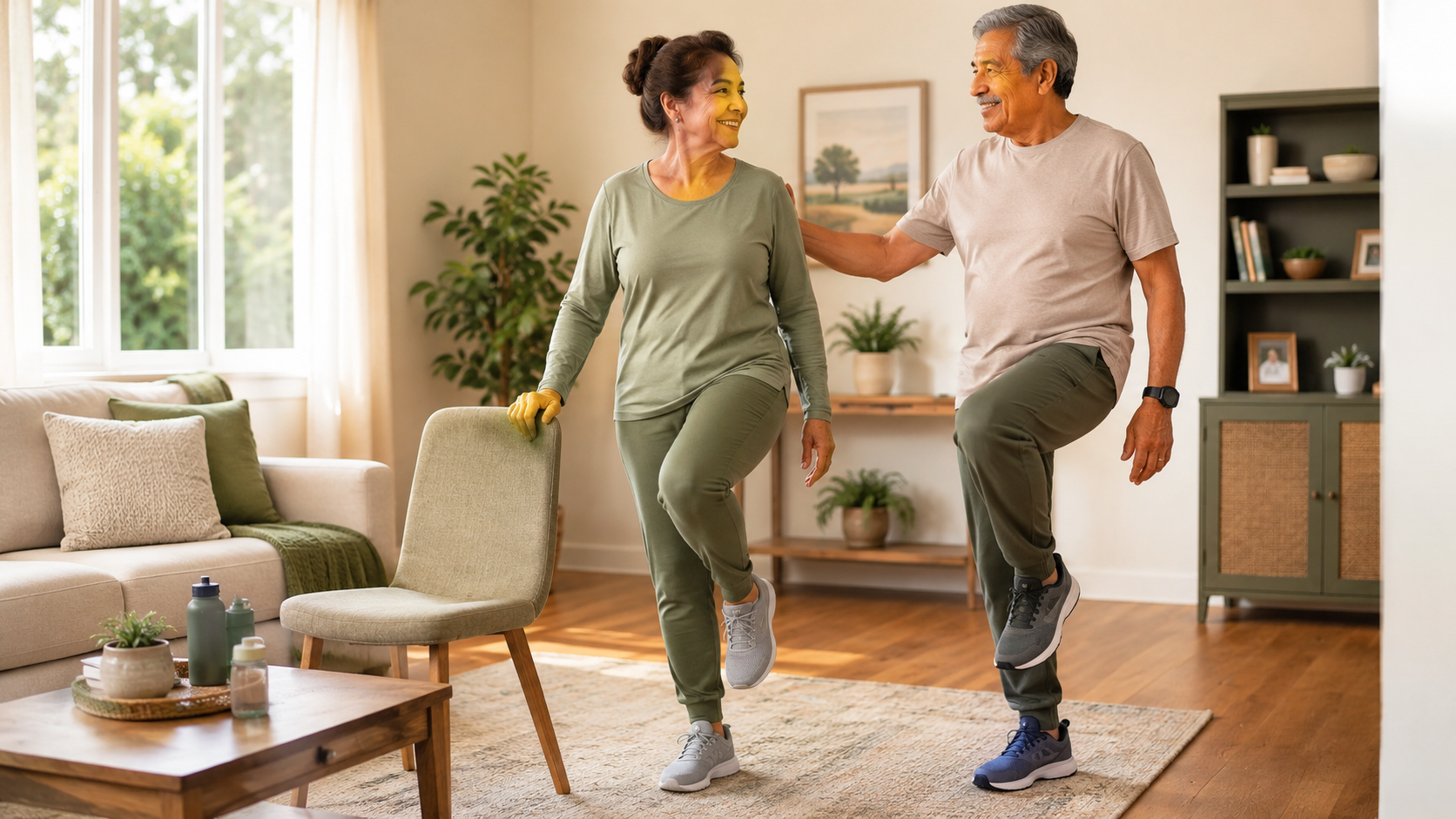
Balance is like any other physical skill. It responds to practice. Simple, low-impact exercises can meaningfully improve stability over time, and many can be done at home without equipment.
A few starting points:
- Standing on one foot for a few seconds at a time, holding onto a counter for support as needed
- Heel-to-toe walking along a hallway
- Gentle chair yoga or tai chi, both of which are widely recommended for older adults
- Short daily walks, which build both strength and confidence
For more structured strength and balance work, our guide to strength training after 60 walks through a beginner-friendly routine.
Medication Review
Certain medications can affect balance, alertness, or blood pressure in ways that raise fall risk, sometimes on their own, and sometimes when combined with other medications.
This isn’t about avoiding necessary medication. It’s about knowing the risk exists and reviewing it with a professional:
- Ask a doctor or pharmacist for a full medication review at least once a year, or after any new prescription
- Mention any dizziness, drowsiness, or lightheadedness, even if it seems minor
- Bring an updated list of every medication and supplement, including over-the-counter ones, to every appointment
A pharmacist can often spot a risky combination that an individual doctor, only seeing part of the picture, might miss. If caregiving duties are shared among family, our guide on dividing caregiving responsibilities among siblings can help make sure someone’s clearly responsible for tracking this kind of thing.
Vision and Hearing Checks
Vision and hearing changes often happen gradually, which makes them easy to underestimate. Poor depth perception, blurred vision, or difficulty hearing an approaching hazard (like a pet or another person) can all contribute to a fall.
- Schedule a yearly eye exam, and don’t skip updating glasses prescriptions even if the change feels small
- Ask specifically about cataracts and glaucoma, both of which affect balance-related vision more than people expect
- Get hearing checked periodically, especially if there’s been any noticeable difficulty following conversations or environmental sounds
When to Bring in a Professional
A general checklist can only go so far. If falls have already happened, or if balance has noticeably declined, it may be time for a more personalized evaluation.
A physical or occupational therapist can assess gait, strength, and balance specifically, and recommend exercises or equipment tailored to the individual rather than general advice. This is worth considering after any fall, even a minor one, since a fall is often a sign that something changed.
Frequently Asked Questions
Do I need to fix the home first, or focus on habits first?
Neither has to come first. They work best together. If you’re starting somewhere, addressing the highest-risk home hazards (like loose rugs or poor bathroom lighting) alongside a simple medication review with a doctor covers a lot of ground quickly.
How often should balance exercises be done to make a difference?
Consistency matters more than intensity. A few minutes most days tends to help more than a longer session once a week.
Is it normal for balance to decline with age?
Some decline is common, but significant or sudden changes in balance are worth mentioning to a doctor rather than assuming they’re simply part of aging.
Can vitamin D or other supplements help with fall prevention?
Some research points to vitamin D’s role in bone and muscle health, but supplement decisions should be made with a doctor, since needs vary by individual and existing health conditions.
What’s the difference between this and a home safety checklist?
A home safety checklist addresses the environment: lighting, hazards, grab bars. This guide focuses on the person: footwear, strength, medications, and senses. Both matter, and most families benefit from looking at both.
Want the Full Picture?
This guide focuses on personal habits that help prevent falls. For a room-by-room look at making the home itself safer, visit our Aging in Place Home Safety Checklist, or start with our Complete Guide to Healthy Aging. If caregiving responsibilities are also part of the picture, our Complete Guide to Family Caregiving can help too.
Sources and References
- Centers for Disease Control and Prevention: Older Adult Fall Prevention (cdc.gov)
- National Institute on Aging: Falls and Fractures in Older Adults, Causes and Prevention (nia.nih.gov)
- National Institute on Aging: Older Adults and Balance Problems (nia.nih.gov)
This article provides general educational information and is not medical advice. Always consult a doctor, pharmacist, or physical therapist for guidance specific to an individual’s health and medications. See our Disclaimer for more.